


What Makes Guests Stay Longer at a Corporate Event?
A corporate event can look successful on paper and still have one problem. Guests start leaving early.
The venue may be beautiful. Dinner may be excellent. The presentations may go exactly as planned. But once the formal program ends, people begin checking their phones, saying goodbye, and heading toward the door.
Keeping guests at an event longer is not about forcing them to stay or simply adding more activities to the schedule. It is about giving them a reason to want to stay.
The most successful corporate events maintain momentum throughout the evening. Guests know what is happening next, have opportunities to participate, and keep finding reasons to interact with others. Here are some of the factors that can make the difference.
The Event Needs a Reason to Continue
One of the easiest ways an event loses energy is when guests feel the evening is already over. Imagine a typical corporate program:
- Guests arrive.
- They have dinner.
- Someone gives a speech.
- Awards are presented.
- Then nothing clearly happens next.
Even if the event technically continues for another two hours, guests may interpret the end of the formal program as the end of the evening. This is why the transition into entertainment matters.
The next part of the event should feel intentional rather than optional or added at the last minute.
Interactive entertainment can provide that transition by giving guests something new to experience once dinner, presentations, or awards are complete.
Give Guests Something to Do Together
Passive entertainment can create atmosphere, but it does not always give guests a reason to participate. A band may sound great. A DJ may create energy. Décor can transform a room. But guests can still stand in the same groups they arrived with or decide that they have experienced enough of the event. Interactive entertainment changes the dynamic.
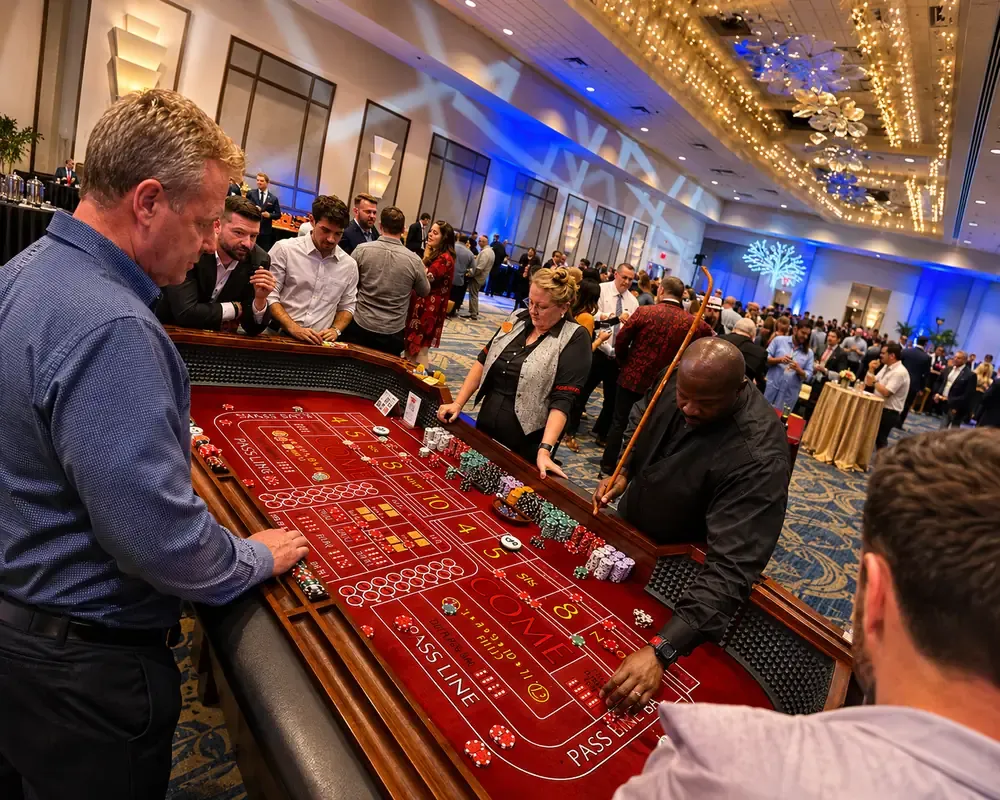
A casino-themed experience, for example, gives guests an activity they can join together. Blackjack, roulette, craps, poker, and other casino games create gathering points around the room where people can participate, watch, learn, and talk. Casino Party Planners events use play money for entertainment only, so guests can focus on the social experience rather than real wagering. The activity provides a reason to stay because there is always another table to visit, another game to try, or another group to join.
Create More Than One Moment During the Evening
Some events put almost all of their energy into one major moment. Maybe it is an awards presentation. Maybe it is a keynote speaker. Maybe it is dinner. Once that moment ends, the evening can feel as though it has reached its conclusion. A stronger event creates several stages.
Guests might begin with a reception, move into dinner, watch a presentation, and then enter an interactive entertainment portion. Each transition gives the evening a new sense of momentum. Instead of asking guests to remain in the same experience for several hours, the event keeps changing. That variety can make the evening feel shorter even when guests stay longer.
Make the Transition From Formal to Social Clear
Corporate events often begin with a structured program and become more relaxed later. That transition should be obvious. If guests finish dinner but do not know what happens next, they may naturally assume it is time to leave.
Opening the casino floor, changing the music, moving guests into another area, or introducing a new entertainment experience can signal that a new part of the evening has begun. This change in atmosphere can be particularly effective after presentations, awards, or company remarks. The formal portion has ended, but the event has not.
Let Guests Participate at Their Own Pace
Not everyone wants to experience an event the same way. Some guests want to be involved in everything. Others prefer to watch first. Some want to spend most of the evening talking with coworkers or clients.
Entertainment that requires everyone to participate at the same time can make the experience feel restrictive. Flexible activities allow guests to make their own choices. At a casino-themed corporate event, someone might spend time at blackjack, watch a craps table, talk with colleagues near roulette, take a break, and return to another game later. Guests do not have to follow one rigid entertainment schedule. That freedom makes it easier for different personalities to enjoy the same event.
Make It Easy for Beginners to Join
An activity can only keep guests engaged if they feel comfortable participating. If people believe they need experience before joining, many will simply watch from a distance. This is particularly important with casino entertainment. Not every guest knows how to play blackjack, roulette, craps, or poker. They should not need to.
Professional dealers can explain the games, answer questions, and help new players participate without feeling uncomfortable. For a corporate event, the objective is not to find the most experienced casino player in the room. The objective is to create shared entertainment. When beginners feel welcome, more guests become part of the experience.
Give Guests Reasons to Move Around the Room
Events can lose energy when people remain in the same place all evening. Guests sit with the same coworkers during dinner, continue talking to those same people afterward, and eventually leave together. Creating different areas of activity encourages movement. A casino floor can naturally help with this.
Guests may begin at blackjack, move to roulette, stop to watch craps, and later join another group at a different table. Each movement creates opportunities for new conversations. The room begins to feel active rather than static. For corporate events where networking or employee interaction matters, that movement can be especially valuable.
Avoid Long Periods With Nothing Happening
Event momentum can disappear quickly. A thirty-minute gap between dinner and entertainment may not sound significant during the planning process. For guests, it can feel much longer. They may finish eating, look around, and decide there is nothing else they need to wait for. Transitions should therefore be planned just as carefully as the major parts of the event.
If casino entertainment begins after dinner, the tables should be ready when guests are expected to move into that portion of the evening. The less uncertainty guests experience, the easier it is to maintain momentum.
Give People Something They Have Not Already Experienced
Another reason guests leave early is predictability. They know the format. Reception. Dinner. Speech. Music. Home. There is nothing wrong with any of those elements, but repeating the same structure every year can reduce anticipation.
Interactive entertainment introduces a different type of experience. A corporate casino night gives guests something to participate in rather than simply observe. Even employees who attended last year's company party may experience the event differently depending on which games they try, who they meet at the tables, and how the evening develops. Novelty can help make guests curious about what happens next.
Do Not Make the Schedule Too Full
Keeping guests engaged does not mean filling every minute. In fact, an overloaded schedule can have the opposite effect. If guests are constantly being moved from one activity to another, they may begin looking for an opportunity to leave. A strong corporate event usually needs a balance between structure and freedom.
There should be enough happening to maintain interest, but also enough flexibility for guests to have conversations, get food, participate in entertainment, or simply enjoy the atmosphere. Interactive entertainment works well in this environment because it does not require every guest to follow the same schedule.
Consider the Length of Each Part of the Event
Pacing matters. A presentation that runs much longer than expected can reduce the energy available for everything that follows. Dinner service that takes too long can do the same. Entertainment introduced too late may begin after some guests have already decided to leave.
When planning the event, consider how each part affects the next one. You are not simply creating a schedule. You are managing the energy of the room. Ideally, guests should move into the entertainment portion while they are still engaged and interested in what comes next.
Create Natural Social Opportunities
Corporate events often aim to strengthen relationships between employees, clients, partners, or leadership teams. But simply placing everyone in the same room does not guarantee meaningful interaction. Guests need reasons to start conversations. Shared activities make that easier.
At a casino table, people can react to the same game, ask questions, celebrate a play money win, or learn together. The conversation does not need to begin with a formal introduction. The activity does some of the work. These small interactions can encourage guests to stay because they continue meeting people and having new experiences throughout the evening.
Think About Guests Who Do Not Want to Play
Interactive entertainment should not require universal participation. Some guests may prefer to watch. Others may want to spend most of the evening talking. A successful casino-themed event can accommodate both. Games can provide visual activity and conversation points even for people who never sit down to play.
The overall event can also include music, food, seating areas, photo opportunities, or other entertainment. The goal is to create choices. When guests have several ways to enjoy the event, they are less likely to feel that the evening has nothing left for them.
The Environment Matters Too
Entertainment is important, but the room itself also influences how long people stay. If the entertainment is hidden in a separate area, guests may never discover it. If tables are packed too tightly together, participation may feel uncomfortable. If the room is too spread out, the event may appear empty even when attendance is strong.
Food service, seating, entertainment, music, and casino tables should work together. A well-planned environment makes it easy for guests to move naturally between different parts of the event.
End With Energy, Not With an Empty Room
Event planners sometimes focus heavily on how the evening begins and give less attention to how it ends. But the ending is part of what guests remember. Ideally, people should leave while the event still feels active. That is very different from watching the room slowly empty until only a few guests remain.
A clearly planned entertainment period gives the evening structure. Guests have time to participate, socialize, and enjoy the experience before the event reaches a natural conclusion.
So, What Actually Makes Guests Stay Longer?
There is no single trick. Guests stay when the event continues to give them value. They stay because there is something else to experience. They stay because they are talking to someone new. They stay because the next part of the evening feels different from the one that came before it. They stay because participation is easy and the room still feels alive.
The goal should not simply be to make an event longer. It should be to make guests stop thinking about how long they have been there.
Planning a Corporate Event Guests Will Want to Stay For?
Casino Party Planners provides casino-themed entertainment for corporate events, employee celebrations, client appreciation events, conferences, private parties, fundraisers, and special occasions across the United States.
Our premium casino tables and professional dealers help create an interactive environment where beginners and experienced players can participate together using play money for entertainment only.
From blackjack and roulette to craps, poker, and customized event experiences, our team can help you design entertainment that supports the flow, audience, and goals of your event.
If you are planning a corporate event, contact Casino Party Planners to create an experience that gives your guests a reason to stay, interact, and enjoy the evening.
*Casino Party Planners provides casino-themed entertainment for private and corporate events. All games use play money, and no real gambling is involved.


